Restaurants and Takeaways: The Menu That Costs You Orders
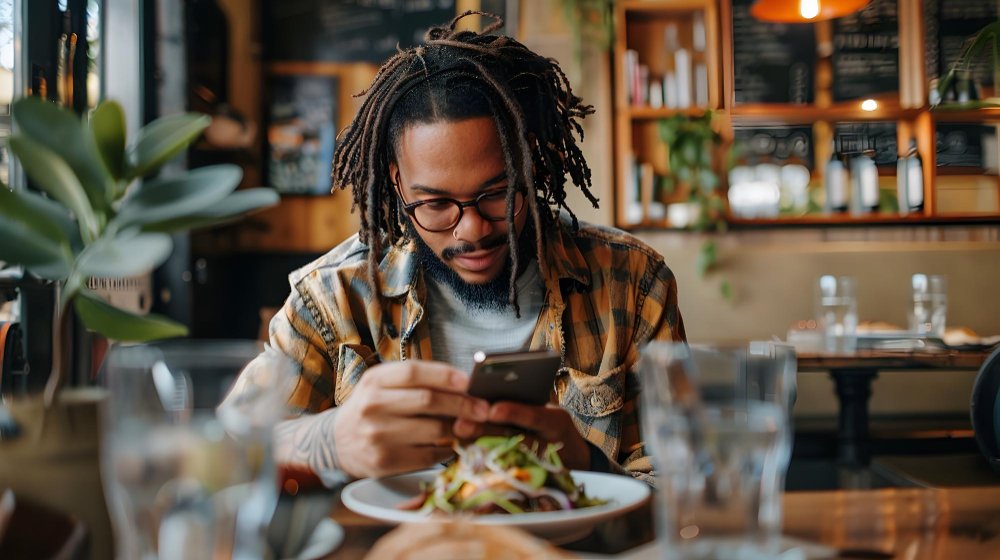
A restaurant menu costs orders in a moment you never witness. Three people are deciding where to eat. One of them checks your menu on a phone.
It is a photograph of a printed sheet, taken slightly crooked, posted to social media in April. They pinch to zoom, cannot read the prices, and suggest somewhere else.
That restaurant menu costs orders every day, and nobody in the kitchen ever finds out.
Why a Photographed Restaurant Menu Costs Orders
Four separate problems, and each loses a table.
It cannot be read on a phone. Zooming around a photograph of A4 paper is work nobody does for a restaurant they have not chosen yet.
It cannot be searched. Somebody looking for a specific dish in your area will never find you, because the words are locked inside an image.
It goes stale. Prices change and nobody reposts, so a customer arrives expecting one figure and pays another.
It cannot be ordered from. A photograph is a dead end at the exact moment somebody wanted to buy.
A restaurant menu costs orders most when it is closest to being useful.
Publish It as a Real Page
The single change that fixes all four problems at once.
Text on a page can be read at any size, found in search, edited in two minutes, and linked to ordering. It also works for somebody with a slow connection, which a large image does not.
Group by course, name every dish plainly, and put the price beside it. Where a dish needs explaining, one short line is enough.
The Details Kenyan Customers Look For
Most restaurant pages answer none of these.
Prices, current. The most searched thing about any restaurant.
Whether you deliver, and where. State the areas plainly rather than making people ask.
Delivery time and minimum order.
Payment methods, with M-Pesa stated explicitly.
Vegetarian and halal options, clearly marked.
Portion size or whether dishes are shareable.
Whether you take bookings for larger groups.
Make Ordering One Step
Every step between hunger and payment loses somebody.
Where you take orders, the menu page itself should carry the ordering route. A WhatsApp button that opens with the dish already referenced beats asking somebody to copy a number and start again.
Our guide to online booking and payments in Kenya covers taking payment properly rather than by screenshot.
Photograph the Food, Not the Menu
The irony of most Kenyan restaurant pages is that they photograph the wrong thing.
Photograph the food, in daylight, on your actual plates, as it is actually served. Photograph the room. Then publish the menu as text.
Six good food photographs and a readable menu outperform thirty stylised images and a menu nobody can read.
Keep It Current
A restaurant menu costs orders the moment it becomes unreliable.
Set a monthly check. Remove dishes you no longer serve, update prices the day they change, and add a last updated date so customers know it is current.
Our post on wrong opening hours online covers the other detail restaurants get wrong most often.
Frequently Asked Questions
Why does a photographed restaurant menu costs orders more than people think? Because it fails at reading, searching, updating and ordering simultaneously.
Should I publish prices? Always. It is the first thing anybody checks.
What about a PDF menu? Better than an image and worse than a page. It still reads badly on phones.
How often should the menu be updated? Monthly, and immediately when prices change.
Do I need online ordering? A clear WhatsApp or phone route works. Full ordering helps at volume.
Should specials be on the same page? Keep them separate so the main menu stays stable.
Text, Priced, Current, Orderable
A restaurant menu costs orders when it is a picture. Publish it as a page, price everything, state your delivery areas, and put ordering on the same screen.
At Africa Web Experts we build restaurant sites with readable menus and ordering built in. From KES 65,000, live in seventy two hours.